Full-Arch Implants
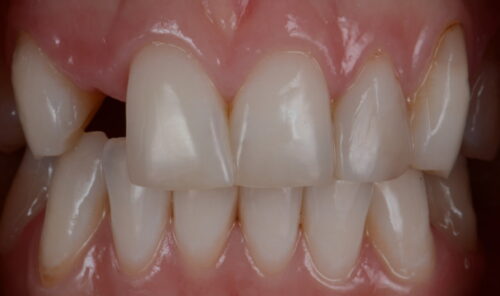
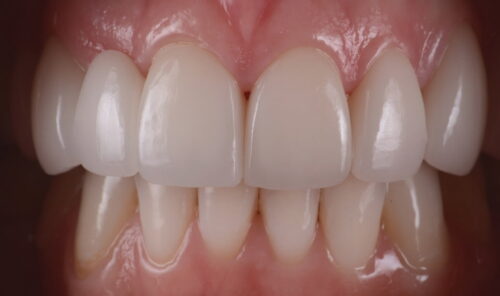
Also known as ‘teeth in a day’, our full mouth dental implant treatment is the ideal option for patients with a full mouth of missing teeth, ill-fitting dentures, or failing teeth. With this cutting-edge treatment, it’s possible to restore your smile in just a single appointment. There’s no need to be without a full smile for a moment longer.
What are full-mouth implants?
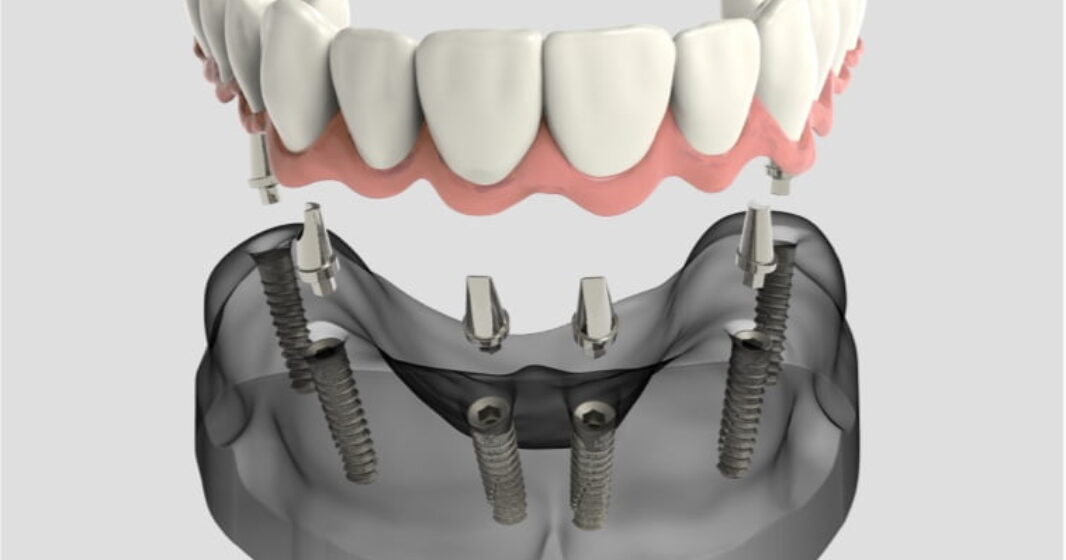
Full mouth rehab is an extremely predictable course of treatment for replacing one or two full arches of missing or failing teeth. Using computer-aided smile design, we can show you how your teeth will look before treatment begins and accurately identify where to place the implants for best results.
Full mouth rehabilitation uses 4–6 implants, which are specifically angled to support a prosthesis encompassing a full set of teeth. This makes it much more cost-effective than having single implants for each gap.
The technology and method we use allow for the placement of a whole arch of temporary teeth in just one appointment. Our implant surgeons have performed thousands of full-mouth dental implant cases and continue to undergo specialist training to keep up to date with the most cutting-edge treatment planning placement techniques. Once your temporary teeth have been placed, you can enjoy a full smile whilst you wait for your jaw to recover from the implant surgery.
Benefits of full-mouth implants
Our patients love full-mouth dental implants because:
- They no longer need to wear a traditional set of dentures.
- No risk of slipping and sliding dentures.
- Improved speech and chewing ability.
- No gum irritation as your new teeth are fixed in place.
- Completely bespoke and natural-looking.
What to expect from dental implant treatment?
We treat every implant placement with the utmost seriousness and attention it needs. To ensure all of our patients are 100% satisfied with their treatment, we have in place the following 7 key stages: the consultation stage, the assessment stage, the planning stage, the surgical stage, the temporary restoration stage, the final restoration stage, and the maintenance stage.
Stage 1: Free Consultation
The first step in your journey is to take advantage of our free consultation service. This is ideal for anyone who is looking to learn more about treatment in a relaxed and non-clinical environment. Our highly-trained team will understand what your concerns are and how you would like to improve your smile. We will go through all the relevant treatments, providing you with detailed information on the benefits, risks, and processes of the treatments. We will also share with you an idea of how much your treatment could cost and discuss financing options. Furthermore, we will share with you examples of patients we have helped who were in a similar situation to yourself. This appointment lasts approximately 45 minutes and is completely free of charge.
Stage 2: Clinical Assessment
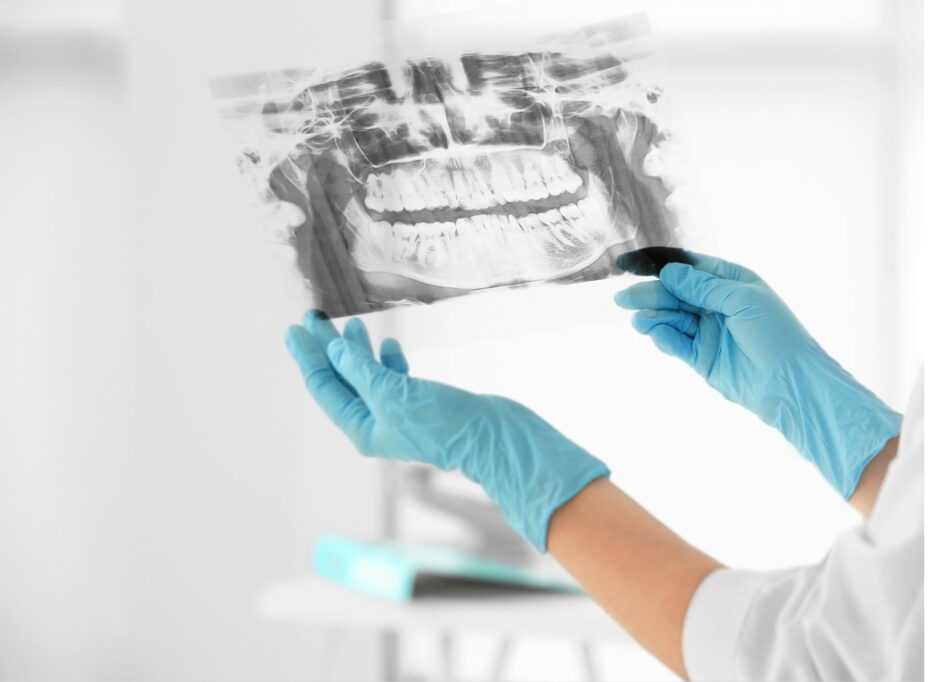
Once you are ready to progress to the next step, we will invite you to an hour-long implant assessment. Our clinical team will listen to your concerns and understand the areas in which you would like to improve. You will be provided with an oral health assessment, after which we will conduct a 3D bone scan. The bone scan will allow our team to assess your bone level, any infections, and other dental risks or considerations. We will share these findings with you and provide you with detailed information on your implant options.
Stage 3: Planning Stage
The planning stage is arguably the important stage of an implant journey. Our clinical team works together to develop a treatment plan that we believe will give you the best and most predictable results. You will be provided with a bespoke treatment plan, which will include information about your general health, your dental health, the treatment that you have selected, the process, and the possible risks and complications. It will also include fees and payment options. We will only move to the surgical stage once you are 100% happy with your treatment plan.
Stage 4: Surgical Stage
Typically, our clinical team will schedule half a day for each patient who has dental implant treatment with us. Therefore, the session may take anywhere between 2 and 4 hours. If you have opted for IV sedation, then this will be administered to you upon your arrival. If you are nervous about having dental treatment, intravenous (IV) sedation is an effective and safe treatment. IV sedation brings you to a state of semi-consciousness. You won’t be fully aware of what’s happening, but you will be able to respond to verbal commands or light touches. After this, the surgical procedure will begin, which can consist of existing tooth or root removal, hygiene treatment, bone grafting, and dental implant placement.
Stage 5: Temporary Restoration Stage
Patients are provided with a temporary restoration after their implant surgery. However, some patients need to wait several months while the implants fully heal before they can be restored with a crown or a bridge. A common reason why implants fail is to do with loading the implants too early. Therefore, our team will never rush the healing process. Our team will carefully monitor your progress over the upcoming months to ensure your implants are healing and binding well to your jawbone.
Stage 6: Final Restoration Stage
Once we are satisfied with the progress of your implants, we will only then move on to designing your final restoration. We are fortunate to have an on-site dental laboratory where we manufacture all of our restorations in-house. Our patients often spend time at our laboratory, meeting the dental technicians who will create the final restoration. During this process, our patients are encouraged to bring in old photographs of their smiles and fully immerse themselves in the smile design process.
Stage 7: Maintenance Stage
To minimise implant failure rates and ensure long-term success, our patients are provided with detailed information on how to care for their implants. Your treating dentist will recommend a suitable maintenance plan, which may include regular dental assessments, hygiene, and gum treatment, as well as annual implant health assessments.